Insights & Strategies for Independent Hoteliers.
Today’s Revenue Management Thought - ran for 4 years
Now I publish Monday Revenue Rethink each Monday
5 Revenue Management Mistakes
Costing You Money
Dynamic Pricing Myths
Holding Your Hotel Back
How to Compete with OTAs
Without Losing Margin
The Power of a
Balanced Channel Mix
Today's Revenue Management thought:-
It’s Friday - time to contemplate.
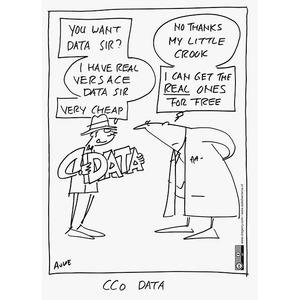
Be cautious about sharing your data, as it holds significant value.
Can we genuinely trust the data we purchase?
Who truly owns the accumulated data—the source or the collector?
Have a profitable week.
✌🏼
Today's Revenue Management thought:-
The Evolving Role of Revenue Managers
In light of these developments, the role of the revenue manager is evolving. The traditional skill set focused on manual data analysis and pricing strategies is expanding. Revenue managers must now navigate complex data landscapes, leverage AI tools effectively, and innovate to maintain a competitive edge.
Strategic Adaptation: Revenue managers need to develop strategic thinking skills to interpret data creatively and identify unique opportunities. This involves moving beyond standardized solutions and finding novel ways to apply insights.
Collaboration and Networking: Building relationships within the industry can enhance data sharing and collaborative opportunities. Networking with other professionals and participating in industry forums can provide additional insights and learning opportunities.
Continuous Learning: Keeping up with technological advancements and emerging data trends is crucial. Revenue managers should invest in ongoing education and training to stay ahead in a data-driven environment.
Have a profitable week !
✌🏼
Today's Revenue Management thought:-
The Cons of Data Sharing in Revenue Management
Why it matters - If more hotels ingest the same data and use the same automated systems to manage their demand and their pricing, a key question arises: if everyone is acting in the same way, where is the commercial or the competitive advantage? In this context, the revenue manager’s job spec must change.
Loss of Competitive Edge: When all hotels have access to the same data and use similar automated systems, differentiation becomes challenging. The uniqueness of a hotel's strategy might diminish, potentially leading to a homogeneous market.
Data Privacy Concerns: Sharing data, especially detailed and commercially sensitive information, raises privacy issues. Ensuring data is anonymized and secure is crucial to avoid breaches and misuse.
Cost Implications: While generic datasets might be free, accessing detailed and valuable data often comes at a price. Smaller hotels may find these costs prohibitive, leading to a potential disparity in the market.
Over-reliance on Technology: With the increased use of automated systems, there's a risk of over-reliance on technology. Human intuition and expertise should complement data-driven decisions to avoid potential pitfalls.
Have a profitable week !
✌🏼
Today's Revenue Management thought:-
The Pros of Data Sharing in Revenue Management
What’s happening - Anonymised and generic datasets are likely to be free, while datasets that include detailed and commercially sensitive information will come at a price. The key point, as ever, is what you chose to do with the information.
Enhanced Decision-Making: Access to a broader range of data enables more informed decisions. Hotels can better understand market trends, customer behaviors, and competitor strategies, leading to more accurate forecasting and pricing strategies.
Improved Customer Experience: By sharing data, hotels can gain insights into customer preferences and tailor their services accordingly. This personalization can enhance the guest experience, fostering loyalty and repeat business.
Operational Efficiency: Data sharing facilitates smoother operations. For instance, understanding peak booking times or common guest complaints can help in resource allocation and service improvements.
Market Insights and Benchmarking: Access to industry-wide data allows hotels to benchmark their performance against competitors, identify gaps in their offerings, and capitalize on emerging trends.
Have a profitable week !
✌🏼
Today's Revenue Management thought:-
Our industry generates vast amounts of data, some of which is freely accessible while other portions require a subscription.
With the growing prevalence of AI applications, hotel revenue managers see significant potential in enhanced data sharing and collaboration. Although data sharing offers many benefits, it also presents challenges that require careful management.
By adapting to these changes, revenue managers can leverage data to drive innovation and maintain a competitive edge in this dynamic industry.
Stay tuned - this week we'll explore how Data Sharing drives revenue management, highlighting its pros and cons.
Have a profitable week !
✌🏼
Today's Revenue Management thought:-
It’s Friday - time to contemplate.
Are we aiming to fill beds with heads or just to stuff the till with cash?

Have a profitable week.
✌🏼
Today's Revenue Management thought:-
Balancing the Pros and Cons
To successfully implement per person pricing, hotels must strike a balance between maximizing revenue and maintaining guest satisfaction. One approach is to offer clear and transparent communication about what is included in the per person rate, ensuring guests understand the value they are receiving.
Investing in advanced booking systems can help manage the complexity of per person pricing. These systems can automatically adjust rates based on the number of guests and ensure accuracy in billing, reducing the risk of errors and improving operational efficiency.
Hotels can also consider hybrid pricing models. For instance, offering per room rates for certain room types and per person rates for others can cater to different guest preferences and needs. This flexibility can enhance appeal and competitiveness.
Ultimately, the key to successful per person pricing lies in understanding the target market and tailoring the approach accordingly. By carefully balancing the benefits and drawbacks, hotels can leverage this pricing strategy to enhance profitability while ensuring a positive guest experience.
Have a profitable week !
✌🏼
Today's Revenue Management thought:-
Disadvantages of Per Person Pricing
Despite its advantages, per person pricing also has notable drawbacks. One significant challenge is the potential for guest dissatisfaction. Some guests may perceive this pricing model as nickel-and-diming, particularly if they are used to per room rates. This perception can lead to negative reviews and a decrease in guest loyalty.
Another issue is the complexity of implementation. Accurately tracking the number of guests and ensuring that the per person rates are applied correctly requires sophisticated booking systems and vigilant staff. Smaller hotels or those with limited technological resources may find this challenging to manage effectively.
Per person pricing can also complicate the booking process. Guests may find it cumbersome to calculate total costs, especially when comparing rates with other hotels that use a per room pricing strategy. This complexity can potentially drive customers to competitors offering simpler pricing models.
Moreover, this pricing strategy might not always maximize revenue. For example, solo travelers might feel they are paying disproportionately high rates if the base price includes the cost of amenities they don't fully utilize. This can make the hotel less appealing to certain segments of travelers, reducing occupancy rates.
Have a profitable week !
✌🏼
Today's Revenue Management thought:-
Advantages of Per Person Pricing
One of the primary advantages of per person pricing is its potential for increased revenue. By charging for each additional guest, hotels can ensure they are compensated for the extra resources and amenities used. This can be particularly beneficial during peak seasons when occupancy rates are high, and maximizing revenue per guest is crucial.
Another significant benefit is enhanced fairness and transparency. Guests can clearly see what they are paying for, which can lead to higher satisfaction levels. Families and groups, for instance, can understand the cost implications of adding more people to their booking, leading to fewer surprises at checkout.
Per person pricing also allows for better customization of packages and promotions. Hotels can tailor offerings to different guest segments, such as solo travelers, couples, or large families, providing targeted deals that cater to their specific needs. This flexibility can enhance marketing efforts and attract a broader range of customers.
Additionally, this pricing model can improve resource management. By knowing the exact number of guests, hotels can better plan for food and beverage consumption, housekeeping, and other operational aspects, leading to more efficient and cost-effective service delivery.
Have a profitable week !
✌🏼
Today's Revenue Management thought:-
Introduction to Per Person Pricing in Hotels
Per person pricing is a strategy where hotel rates are based on the number of guests occupying a room rather than a fixed rate per room. This approach aims to align pricing more closely with the resources used by each guest, such as breakfast, amenities, and housekeeping services. By charging per person, hotels can more accurately reflect the true cost of accommodating additional guests.
This pricing model is particularly popular in resorts, family-friendly hotels, and properties that offer inclusive packages. It allows for greater flexibility and can attract a wider range of travelers, from solo adventurers to large families.
However, while per person pricing offers several benefits, it also presents certain challenges. In the following parts, we will explore the advantages and disadvantages of this pricing strategy, providing a comprehensive view of its impact on hotel operations, profitability, and guest satisfaction.
Have a profitable week !
✌🏼